By Neha Shaikh
Growboo
DAMASCUS – Syria is preparing a major currency reform, planning to issue new banknotes that will drop two zeros from the pound in an effort to stabilize the economy and rebuild trust in its battered currency. The move comes after the pound’s purchasing power collapsed following 14 years of conflict that ended with President Bashar al-Assad’s ouster last December.
Central Bank Governor Abdelkader Husrieh confirmed the plan on Friday, calling the revaluation a “strategic pillar of fiscal and monetary reforms.” He said committees involving public and private banks, along with central bank experts, have been tasked with determining the technical requirements for the new notes. However, he noted that the official timeline for introducing the currency is still under review.
A collapsed currency
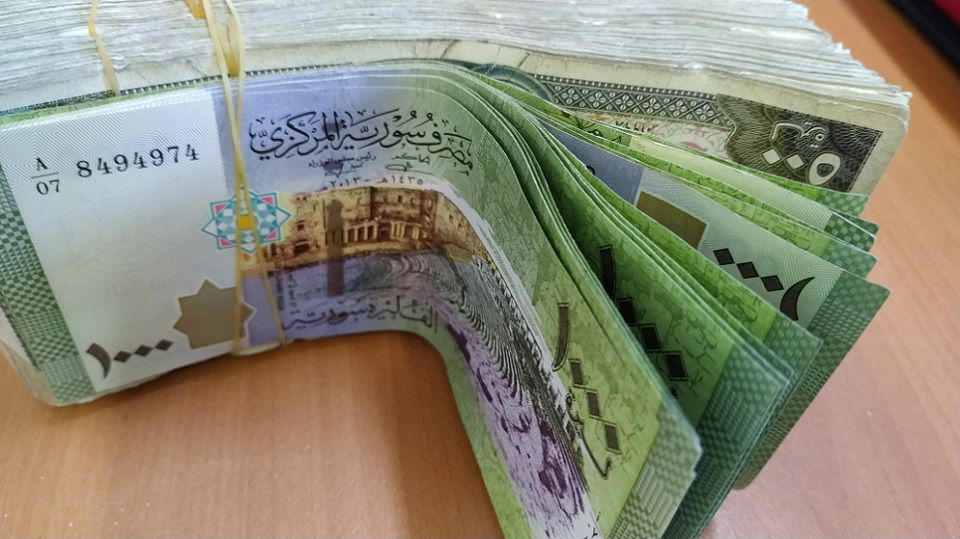
Since the outbreak of war in 2011, the Syrian pound has lost over 99% of its value, plunging from about 50 per U.S. dollar before the conflict to nearly 10,000 today. With the highest current note being 5,000 pounds, routine purchases often require bulky stacks of cash carried in bags, complicating everyday transactions.
Documents reviewed by Reuters show that the central bank informed private lenders in mid-August of its intent to move ahead with the revaluation by “removing zeros.” Bankers familiar with the discussions said Deputy Governor Mukhlis al-Nazer chaired the meetings on the plan.
Although it is unclear whether the step requires legislative approval, Syria is due to hold elections in September to form a new assembly. Officials have also arranged for Russian state-owned printer Goznak to produce the new currency, continuing a partnership that dates back to the Assad era.
Political and economic shift
Under Assad, the use of foreign currencies was tightly restricted. The new leadership has since moved toward a freer market system, allowing dollar use across the economy. But this has raised concerns over limited liquidity in pounds and weak infrastructure for digital payments.
Bankers estimate nearly 40 trillion pounds circulate outside formal banking channels, and the new notes could help the government regain oversight. The revaluation also carries political significance, as current banknotes still display images of Bashar al-Assad and his father Hafez.
The central bank has ordered lenders to prepare by mid-October, with a 12-month coexistence period where both old and new notes will circulate until December 8—the anniversary of Assad’s removal.
Syrian economist Karam Shaar, who advises the United Nations, said the overhaul has symbolic value but warned it could create confusion among citizens and may prove costly. He suggested that issuing larger denominations like 20,000 or 50,000-pound notes could have been a simpler and cheaper alternative.